
Weddings where I come from aren't exactly a one-day affair.
In the Dades Valley, where I grew up, we call our traditional wedding celebration Tamghra. It isn't simply two people getting married, followed by dinner and a bit of dancing. Both families have their own celebrations, responsibilities and traditions.
The groom's family usually has the relatively easy part: one day. The bride's family? Three days.
And that's just the simplified version.
The groom's family: the relatively easy part
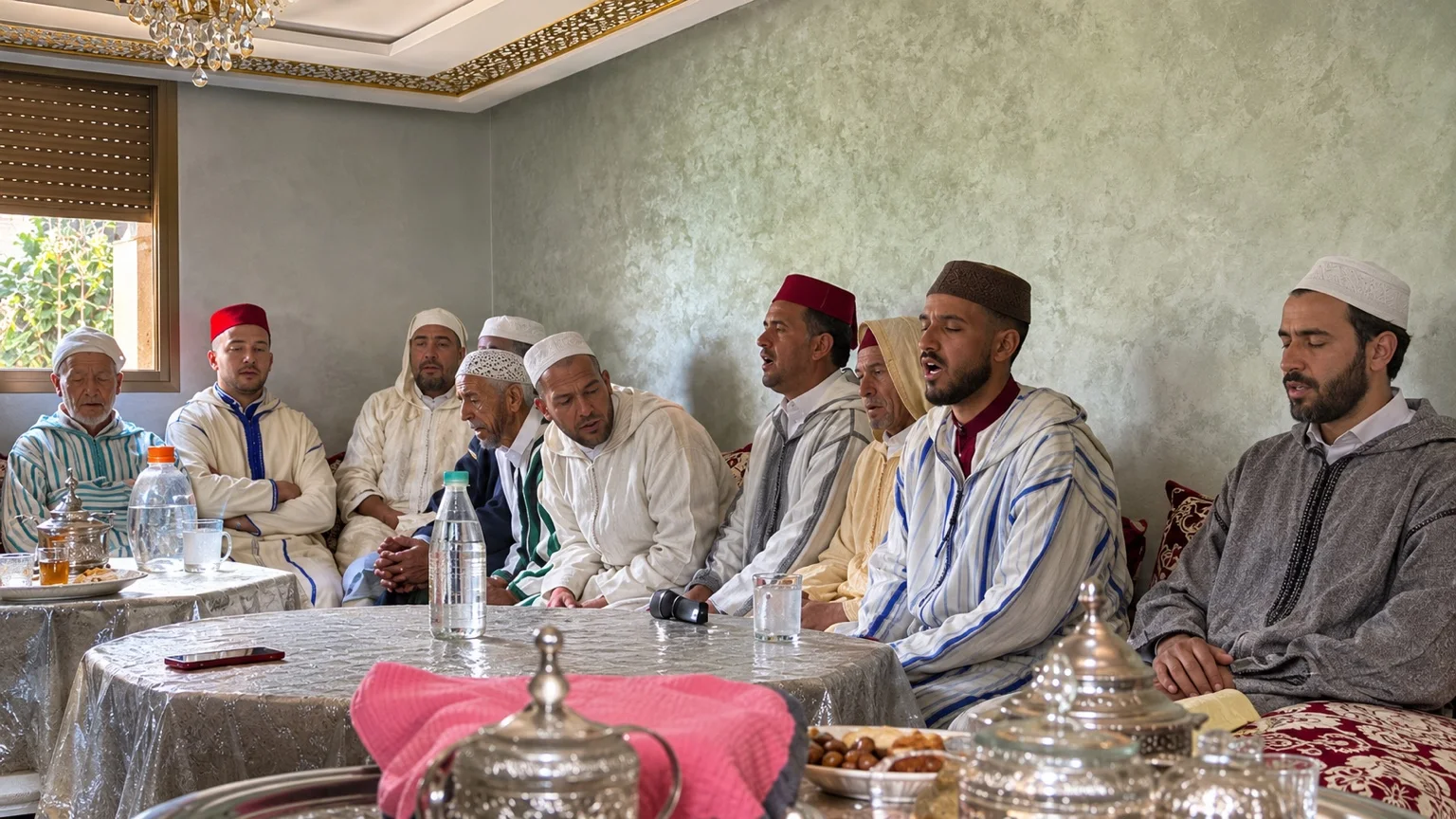
The groom's family's celebration usually starts around lunchtime. The men of the extended family, neighborhood, village, tribe and circle of friends are invited to a communal meal.
We also invite the Talba from surrounding mosques, who recite verses from the Quran during the gathering. It's a time for family, community and hospitality.
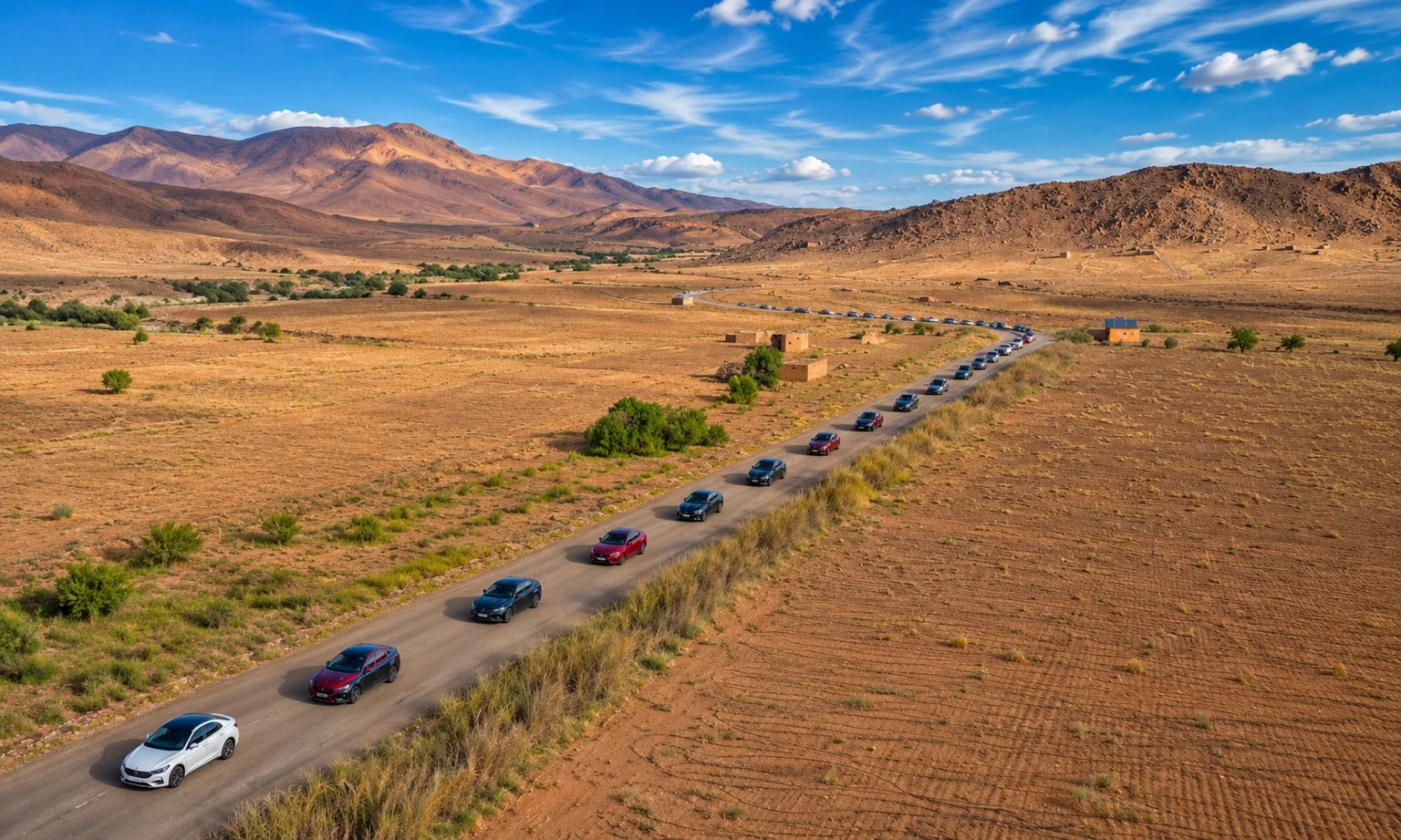
Later in the afternoon comes Isnayn, the dowry convoy. The groom's family heads to the bride's family home with the dowry and ceremonial offerings. They then accompany the bride and her family back to the groom's family home.
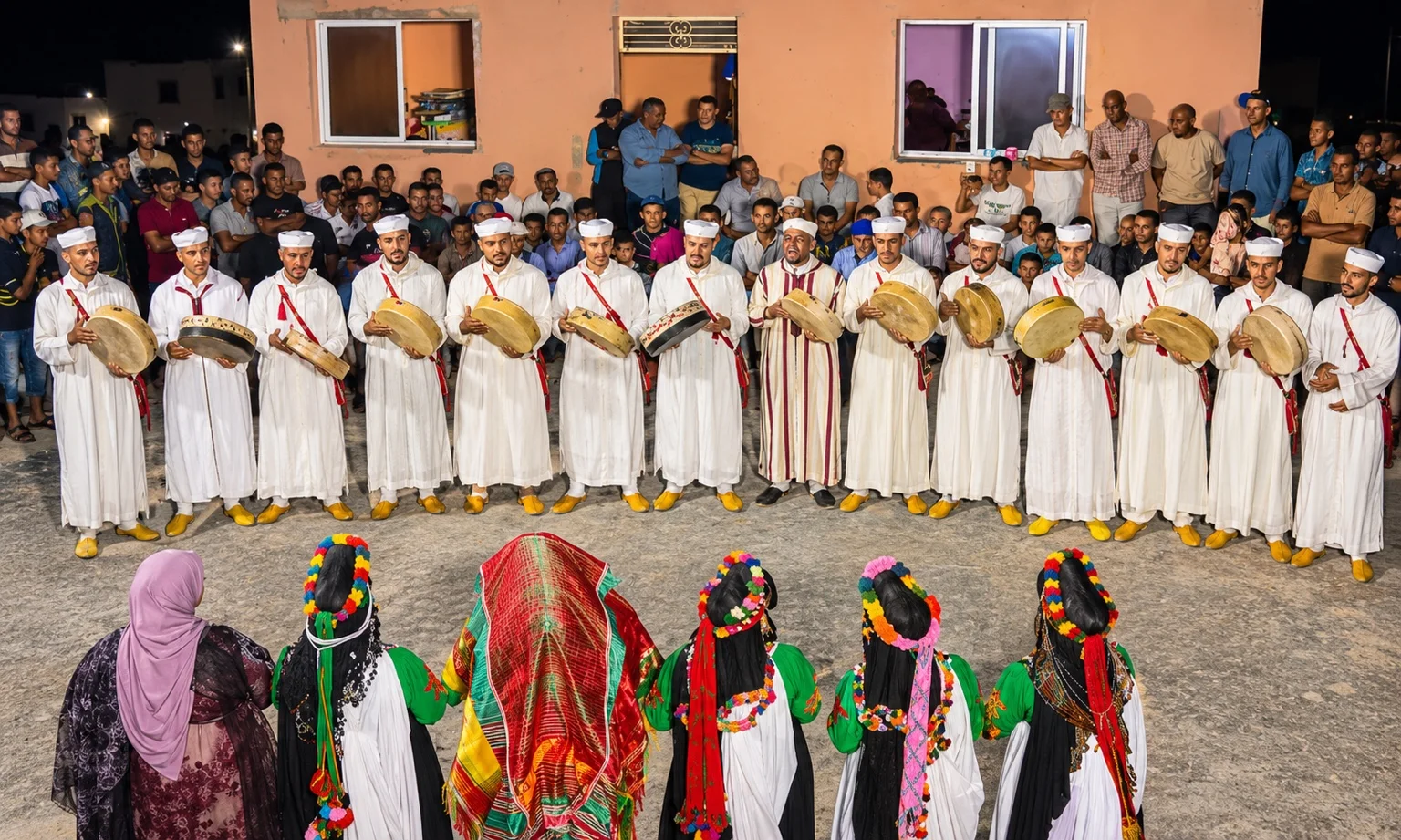
The evening gathering welcomes the women of the extended family, neighborhood, village, tribe and circle of friends. The bride and her family are received, everyone shares dinner, and the celebration continues with music and Ahidous, our Amazigh musical and dance tradition.
A proper festive night. And that's more or less the groom's side of Tamghra.
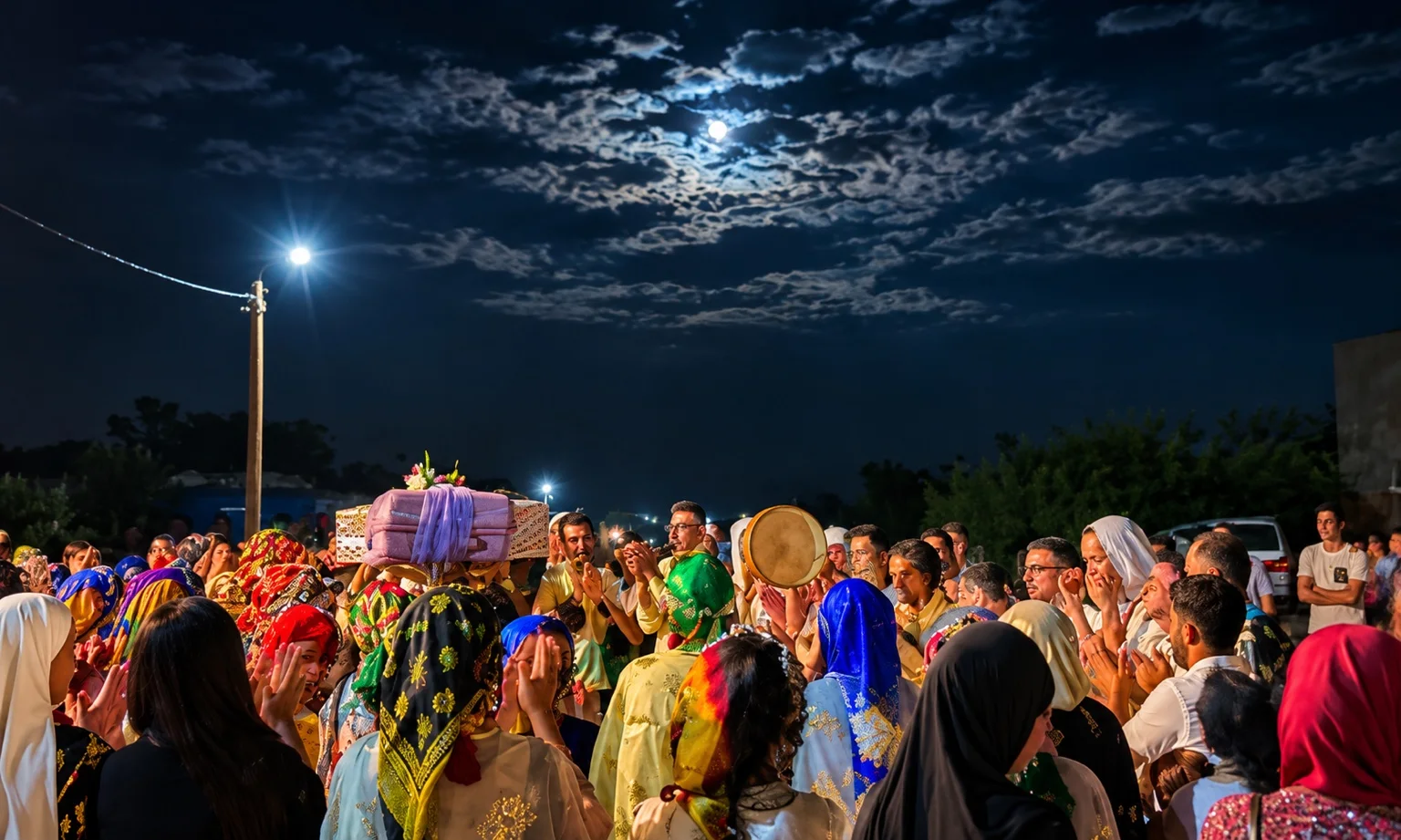
One day. Lunch, procession, dinner, music and celebration. Not exactly a quiet day, but compared with the bride's family, they've got the relatively easy part.
The bride's family: three days of preparations
Now this is where things get a little more complicated.
Day one: As n l'Henna
Think of this as something resembling a bachelorette party.
Except instead of alcohol and strippers, there's the bride's friends, the women of her family and community, folk recitations, henna and celebrations.
The women gather to celebrate the bride's transition into married life, decorate her with henna and prepare for the days ahead. One part of the local tradition is called Hirru n Warru, folk recitations connected in the account I grew up with to Warru and themes of love.
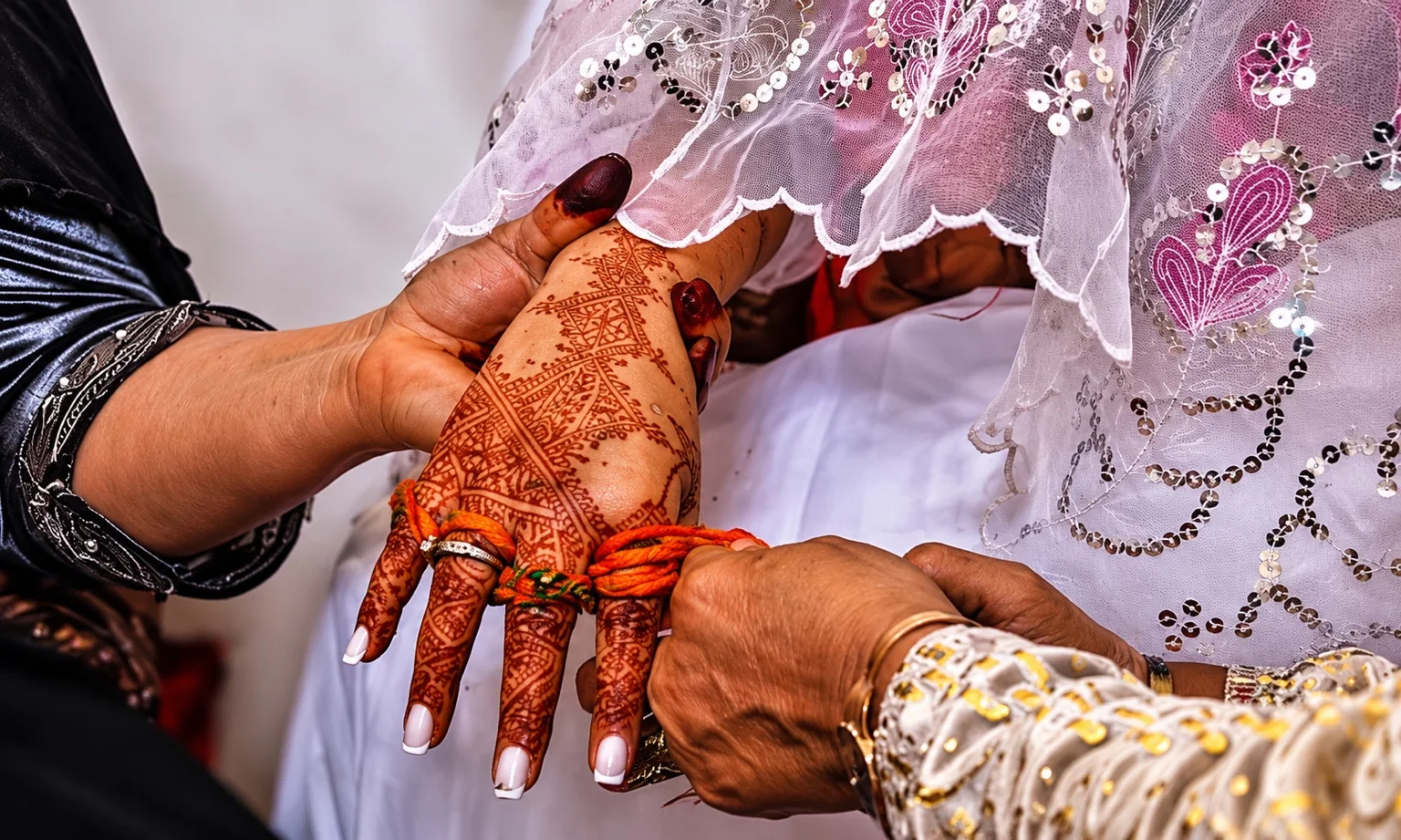
It's also an occasion for women to share the customs they know and keep them alive.
Day two: Atmu and Iabraq
The next morning comes Atmu. Women of the family gather to braid and arrange the bride's hair, making one bun toward her forehead and another at the back of her head.
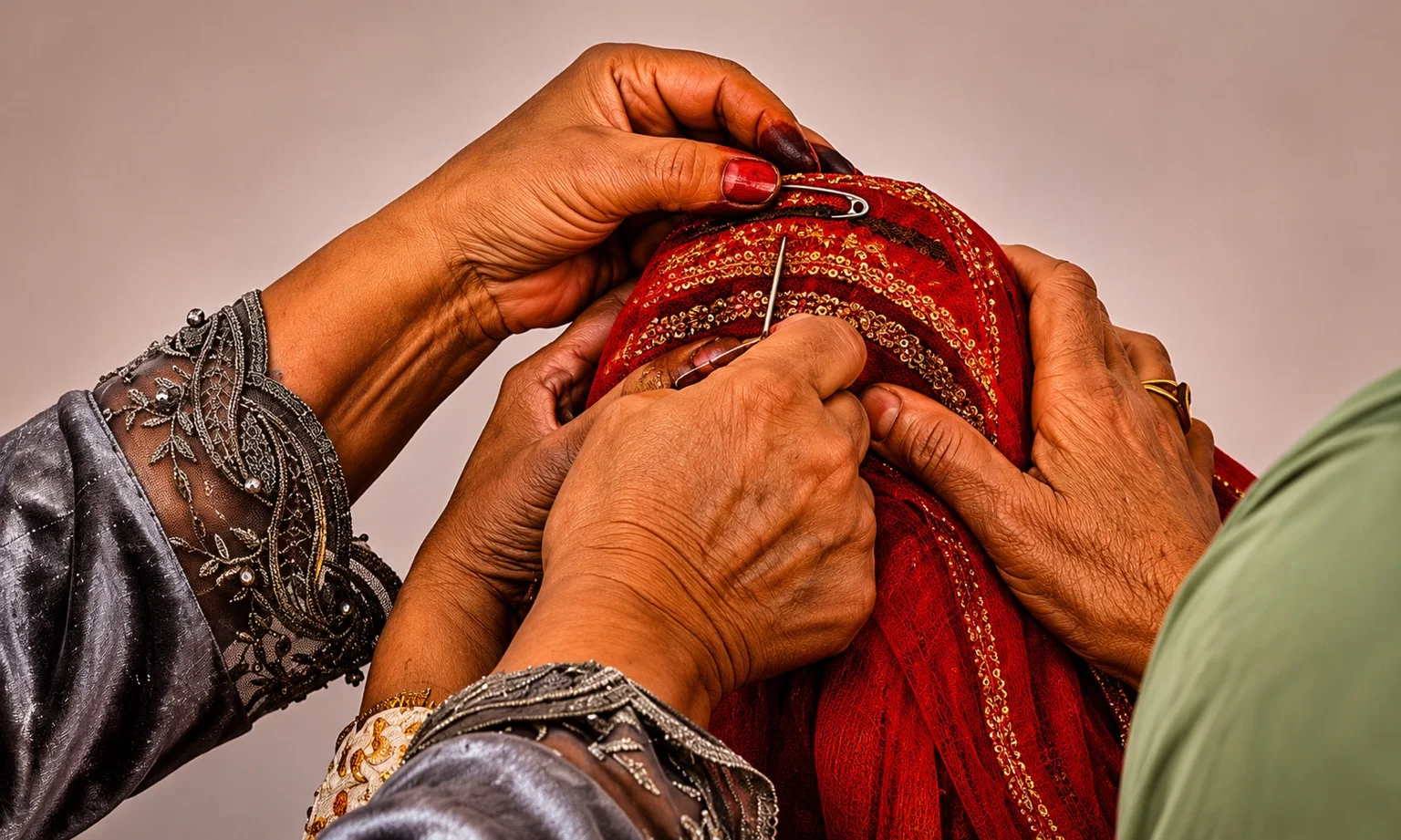
Those preparations lead into the afternoon's Iabraq: dressing the bride in her traditional wedding outfit.
These colorful garments and their details aren't identical from tribe to tribe. The women help the bride dress according to the traditions of her family and community.
Day three: the bride's departure
The third day of the bride's family's celebration is the same day as the groom's family's celebration.
The morning is spent preparing for departure. In the afternoon, the Isnayn convoy arrives to accompany the bride and her family to the groom's family home for dinner, music and the evening festivities.
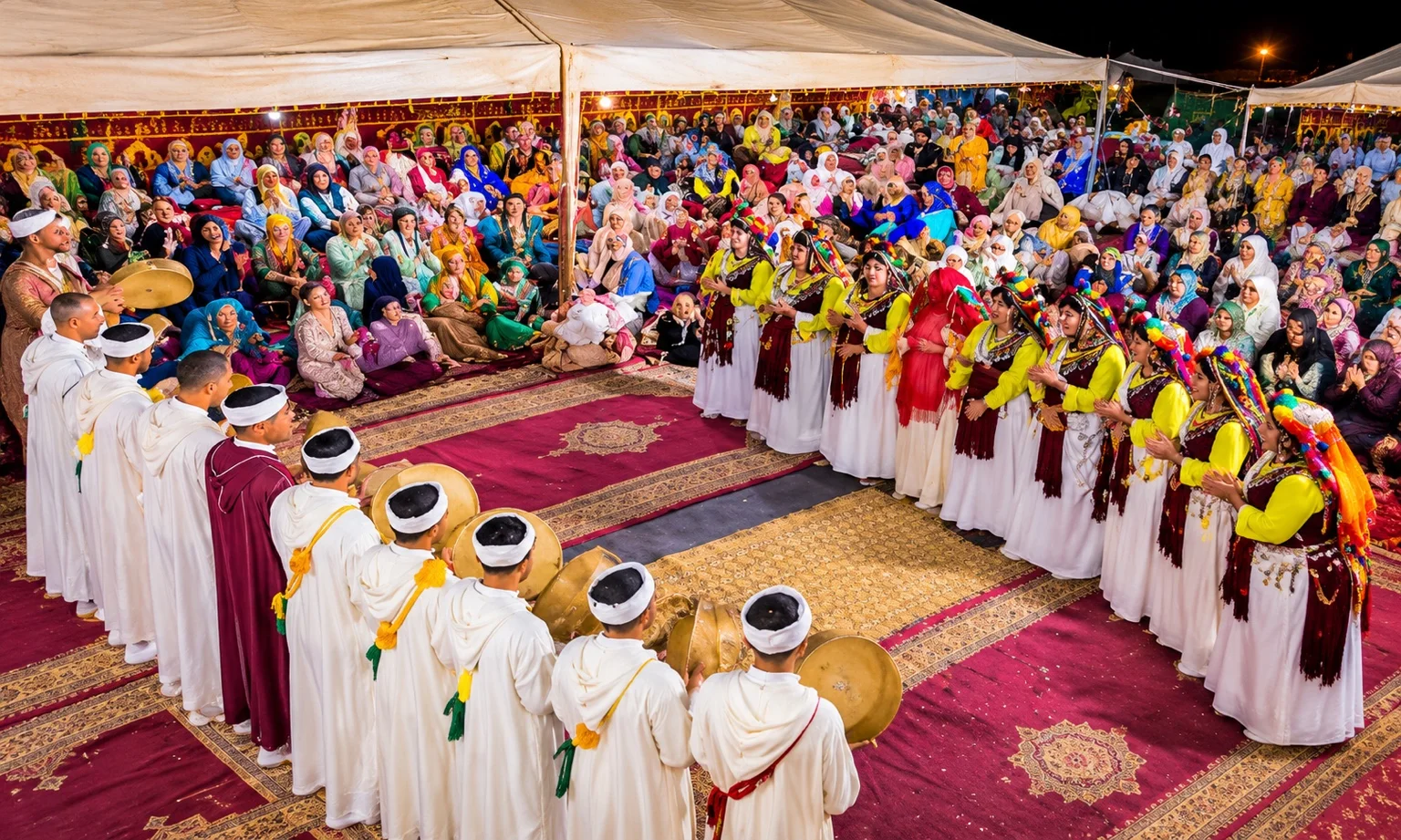
And that's where the two celebrations meet.
And that's only the simplified version
There are smaller traditions I haven't covered here, including Mimoun, the olive branch, and the white cloth wrapped around the bride's fingers and toes.
I'm not going to invent explanations for ceremonies I don't know well enough. I'm not married yet, for a start. Some of the advanced levels are still locked.
A lot of those details are preserved by the older women of our families and communities. They're often the ones who know the correct sequences, the little gestures and the traditions that aren't necessarily written down anywhere.
If I wanted to understand those properly, that's who I'd ask.
Understand it first. Translate it second.
I don't think explaining Moroccan culture to somebody from another country needs to be complicated.
You don't need perfect English, Spanish, French or any other language before you can explain something well. First, you need to understand it yourself. Understand it in Darija or Tamazight. Know what happens and what the tradition means to the people who practice it.
Once you understand something properly, explaining it in another language becomes much easier.
This is the version of Tamghra I know from my part of the Dades Valley. Other Amazigh communities, and even neighboring families, can have different customs.
For me, a wedding here is much more than two people getting married. It's families, community, music, identity and knowledge passed from one generation to the next.
And if you want all the details I left out, start by asking the oldest women in the family. They probably know more about it than the rest of us combined.